

Restaurant Type Determines Your GST Rate
Air-conditioned restaurants pay higher GST than roadside vendors. Table location sets the rate, not what food you serve. Pick wrong and every customer bill becomes a compliance issue.
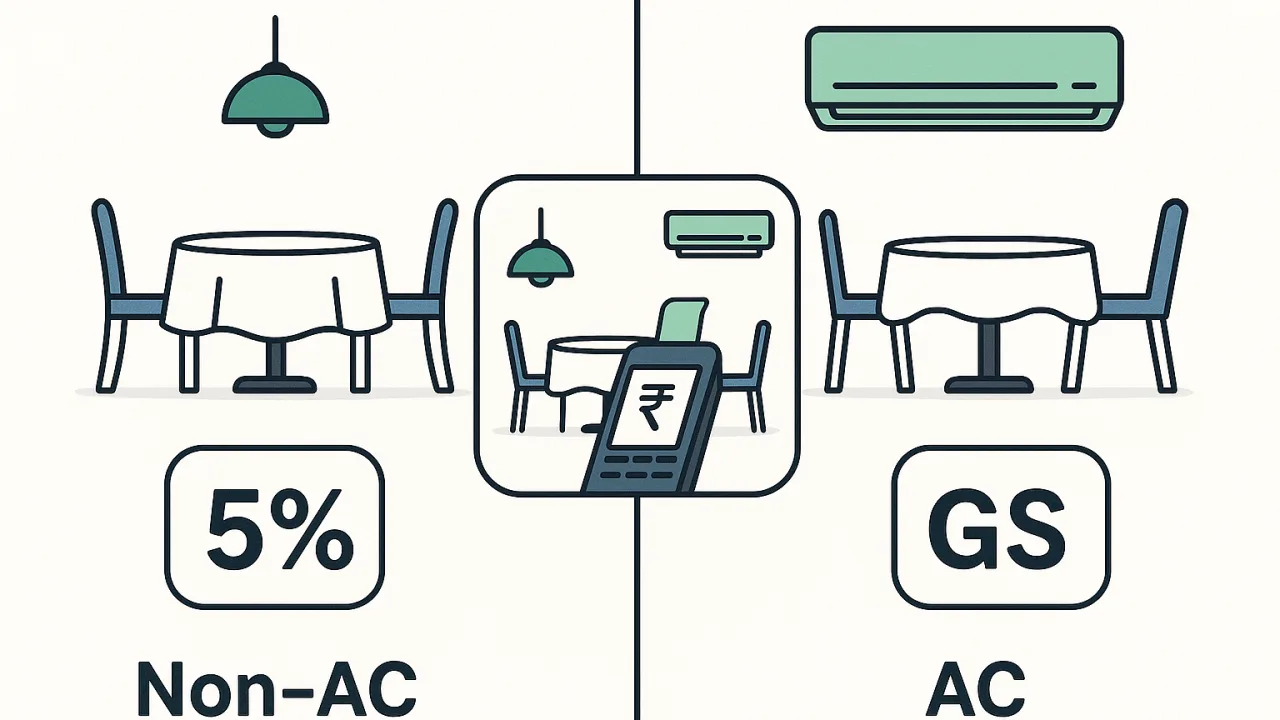
Non-AC establishments get 5% GST on food service. AC restaurants face different rates that change with policy updates. Check current rates on our GST rates page as government revisions affect your daily billing.
Mixed Setup Billing Rules
Both AC and non-AC sections? You need separate billing for each area. The customer's table location decides which rate applies to their entire order.
Kitchen location doesn't matter. Garden seating without AC gets the lower rate even if food comes from an air-conditioned kitchen.
Service Charges Face Full GST
Optional service charges attract standard GST rates as additional restaurant services. This applies beyond your food billing amount.
Food delivery through apps splits differently. Restaurant GST covers food value, platform charges get separate service GST treatment.
Direct takeaway orders skip service charge headaches. Apply basic food service rates without delivery complications.
Invoice Format for Restaurant Bills
Required Bill Elements
Restaurant bills need GST number, invoice date, sequential numbering. Customer GSTIN becomes mandatory for B2B orders above threshold amounts.
Item-wise breakdowns save time during rush hours. List menu items with tax rates separately for customer clarity and audit protection.
HSN Codes for Food Items
Prepared food gets different HSN codes than raw ingredients. Restaurant services use SAC codes distinct from food material classifications.
Wrong codes trigger GSTR-1 filing errors. Use our HSN code guide for correct menu classification during initial setup.
Mobile Billing Beats Desktop Setup
Mobile apps sync with kitchen displays instantly. Orders flow from table service to preparation without manual entry during peak dinner rush.
Split billing happens in seconds. Divide group orders by customer, payment method, or table section faster than desktop software allows.
Multiple GSTIN capture works smoothly on mobile. Handle business dinner details without slowing down other table service.
Returns and Input Credit Claims
Restaurant turnover determines filing deadlines. Higher revenue means monthly GSTR-1 and GSTR-3B with detailed transaction reporting requirements.
Raw material ITC covers ingredients, equipment, furniture. Cleaning services and maintenance providers qualify for credit claims on your returns.
Verify current restaurant ITC rules on gst.gov.in as food service provisions change with policy updates.


