

What Are Bill of Supply and Tax Invoice?
Tax Invoice: For Regular GST Dealers
A tax invoice shows GST amounts separately (₹100 + ₹18 GST = ₹118). Regular GST dealers use tax invoices for taxable sales, enabling B2B customers to claim input tax credit.
Must include GSTIN, customer details, HSN codes, and exact CGST/SGST/IGST breakup.
Bill of Supply: No Separate GST Display
Bill of supply shows only total amount (₹118 inclusive) without GST breakup. Recipients cannot claim input tax credit using this document.
Used by composition dealers, unregistered businesses, or for exempted supplies.
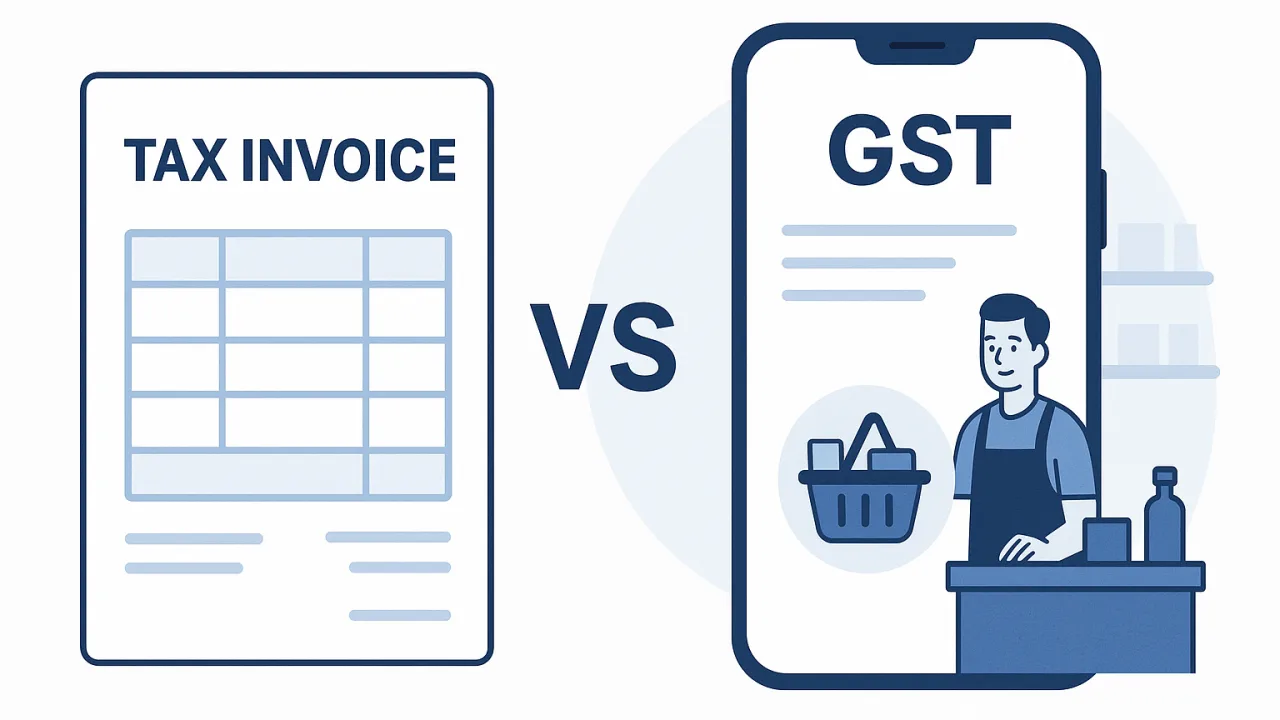
Who Uses Which Document
Composition Dealers: Only Bill of Supply
Composition scheme dealers can only issue bills of supply. Law prohibits charging GST separately or issuing tax invoices to any customer.
Must mention "composition taxable person, not eligible to collect tax on supplies" on the document.
Unregistered Businesses Below ₹20 Lakh Threshold
Use bills of supply for all sales since you don't have GSTIN and cannot charge GST separately.
Exempted Goods and Services
Even regular dealers use bills of supply for exempted items like fresh fruits or educational services. Check current exemptions on GST rates.
Key Compliance Differences
Input Tax Credit Impact
Tax invoices enable ITC claims. Bills of supply don't, making business buyers prefer tax invoices when possible for tax benefits.
Format Requirements
Tax invoices need additional GST fields like place of supply and reverse charge details. Bills of supply have simpler format requirements.
Common Mistakes to Avoid
Regular dealers issuing bills of supply for taxable goods, or composition dealers charging GST separately, both trigger compliance notices.
Missing customer details, wrong HSN codes, or incomplete composition dealer disclaimers cause GST return filing issues.
Mobile Apps Simplify Document Choice
Modern billing apps automatically select tax invoice or bill of supply based on your registration status and product type, preventing manual selection errors.
Work offline during internet outages, ensuring compliant document generation during business hours.
Always verify current rules on gst.gov.in as GST regulations update frequently.


